The technology
NB-BESS™
No-Break Battery Energy Storage System
No-Break Battery Energy Storage System
A double-conversion architecture that feeds the plant permanently through the inverter. There is no transfer, because there is nothing to transfer.
Double conversion
The grid charges.
The inverter delivers.
Incoming grid power is rectified onto a DC bus shared with the battery bank. From there the inverter regenerates a clean, regulated waveform for the plant. The load never sees the grid.
A real 0 ms
This isn't a very fast switchover. It's the absence of one: the load is already being fed by the inverter when the event happens.
Permanent isolation
Sags, swells, momentary interruptions, frequency deviations and transients stay on the grid side. Whatever the utility does, the plant doesn't feel it.
Energy management where it applies
Peak shaving, load shifting and contracted-demand management. It adds to the business case — but it's never the only reason to invest.
The case we see most
A sold-out plant.
A grid that won't cooperate.
It's the scenario we run into most often: an automotive plant running 24/6 with every unit of capacity committed, and a grid that knocks it down several times a month. Each sag stops whole lines, reboots robots, and keeps chipping away at machines that cost more than the system that would protect them. And there is no make-up shift — lost output stays lost, and the plant manager spends the week answering for misses he didn't cause.
An NB-BESS in the 3 MW class, sitting on the critical load, isolates the line from the grid. The sags keep happening — outside.
- Events stop reaching production from day one
- No more robot and PLC reboots, no more cumulative damage to expensive electronics
- Committed capacity actually ships: every hour recovered is straight margin
When everything is already sold, protecting the plant isn't a cost. It's the cheapest way to buy production hours.
Platform
When you grow,
your system grows with you.
Architecture
- Permanent double conversion
- Grid forming
- Mechanical bypass
- Modular parallel configuration
Batteries
- LFP chemistry
- Service life beyond 20 years
- No scheduled periodic replacements
- BMS with integrated safety logic
Installation
- Indoor or outdoor
- Low and medium voltage
- Scales from hundreds of kW to tens of MW
- Footprint planned for future expansion
Operation
- Real-time monitoring
- Power-quality monitoring
- Low maintenance
- 10-year (120-month) warranty included
Final sizing — power, energy, interconnection voltage and autonomy — is defined in the engineering workshop using your single-line diagram and plant layout.
Platform & scope
Numbers to start sizing with
Typical ranges for the NB-BESS platform. Final sizing is issued during engineering, using your single-line diagram, layout and load profile.
| Power per system | 500 kW – 10+ MW (modular blocks in parallel) |
|---|---|
| Energy per system | 470 kWh – 20+ MWh (LFP chemistry) |
| Typical autonomy at critical load | 15 minutes – 10+ hours, depending on the use case |
| Interconnection voltage | Low voltage (480 VAC) and medium voltage (up to 34.5 kV) |
| Conversion-train efficiency | 94 – 96% in continuous double conversion |
| Architecture | Permanent double conversion · grid forming · maintenance bypass |
| Installation | Outdoor or indoor, containerized or in an electrical room |
| Warranty | 10 years (120 months) standard · battery design life >20 years |
| Typical lead time | 4 – 6 months depending on configuration and site works |
Full datasheet, dimensional drawings and engineering documentation are available during the RFQ process on request at [email protected]..
Standards & compliance
Each project's engineering is developed against the frameworks that apply to energy storage and power quality — including UL 9540/9540A, NFPA 855, IEEE 519, IEEE 1547, NOM-001-SEDE and Mexico's Grid Code — and project-specific compliance documentation is delivered during engineering.
Battery safety
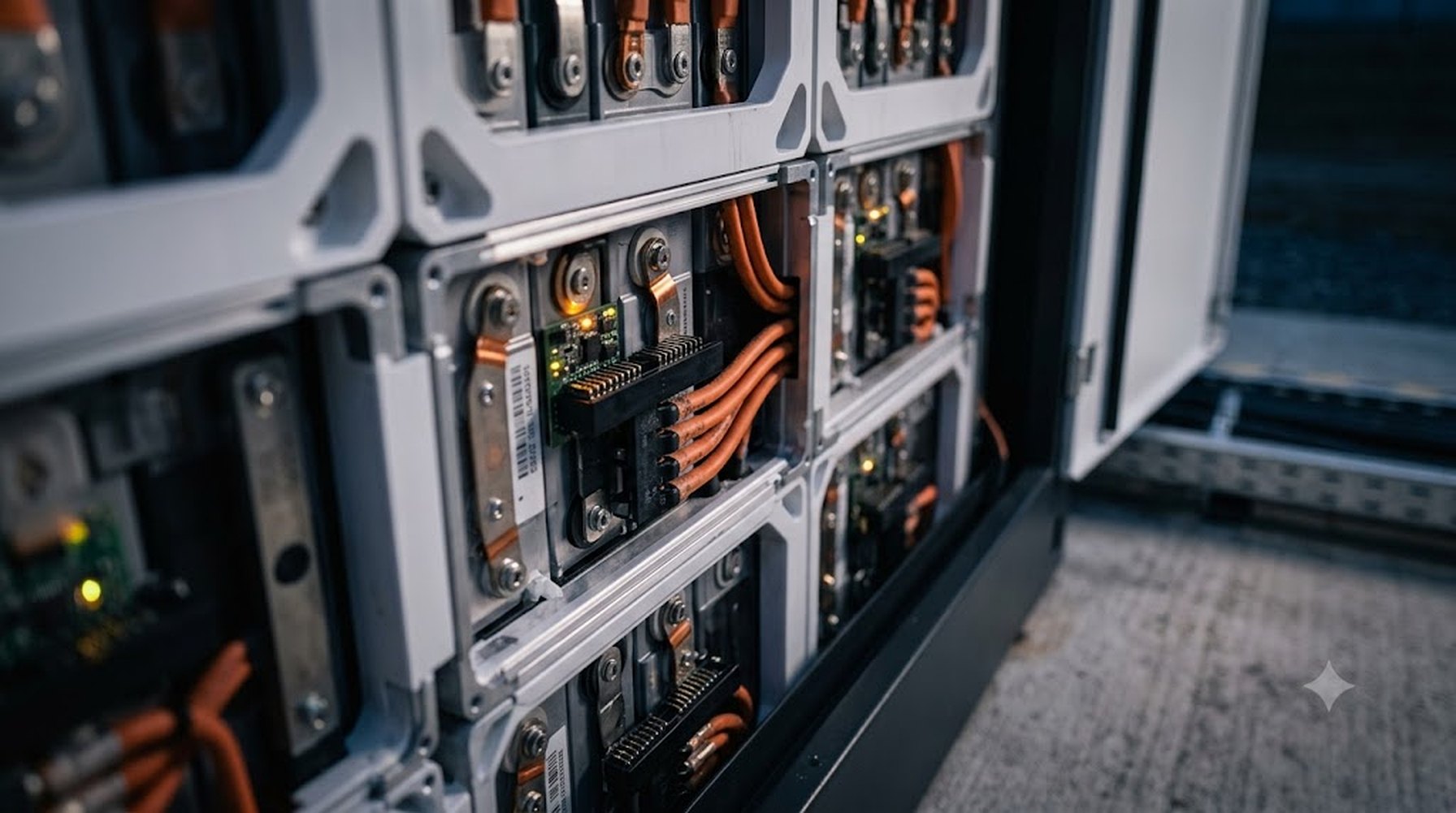
LFP chemistry for thermal stability, a BMS with safety logic and dynamic current limits, continuous cell monitoring, physical separation from production, and coordination with civil protection and the plant's insurer as part of the project scope.
Straight talk
An NB-BESS doesn't compete with a DVR. It replaces the whole electrical room.
A DVR does one thing well: it detects a voltage sag and corrects it for a few seconds. It doesn't isolate the load, doesn't filter harmonics, doesn't correct power factor, doesn't ride through an outage, and doesn't take a cent off the energy bill. It's one component. The NB-BESS is the whole architecture.
And efficiency? A DVR can claim ~99% because it only works a few seconds a year; an NB-BESS runs at 94–96% while processing 100% of your energy, all the time. That margin is the cost of keeping every function on the right active 24/7 — and it's typically recovered through demand management and avoided losses. The math gets done with your plant's numbers, not ours.
The whole electrical room, in one box
- DVR
- Industrial UPS
- Surge suppressor
- Harmonic filter
- Capacitor bank
- Backup generator
- Demand management
It's the only item on the list that isolates, protects and saves at the same time. Each function is sized and validated per project during engineering.
Grows with you — nothing gets thrown away
The platform scales in modules: when the plant grows, you add capacity and move on. No oversizing today's investment "just in case", and no scrapping equipment you already paid for — unlike a custom UPS, a suppressor or a genset, which get replaced outright and put you through the whole project again.
A cost of ownership in a different league
Engineered for a 20+ year life: no diesel refills, no lead-acid batteries to swap every couple of years, virtually no moving parts to maintain. Traditional gear lives in replacement cycles; this platform stays with the plant.
Not a cost — it generates savings
UPS batteries sit idle waiting for a failure. Here the same asset does load shifting, peak shaving and demand-charge control — and when tariff rules change, it's reprogrammed to keep saving.
Service
The project ends.
The accountability doesn't.
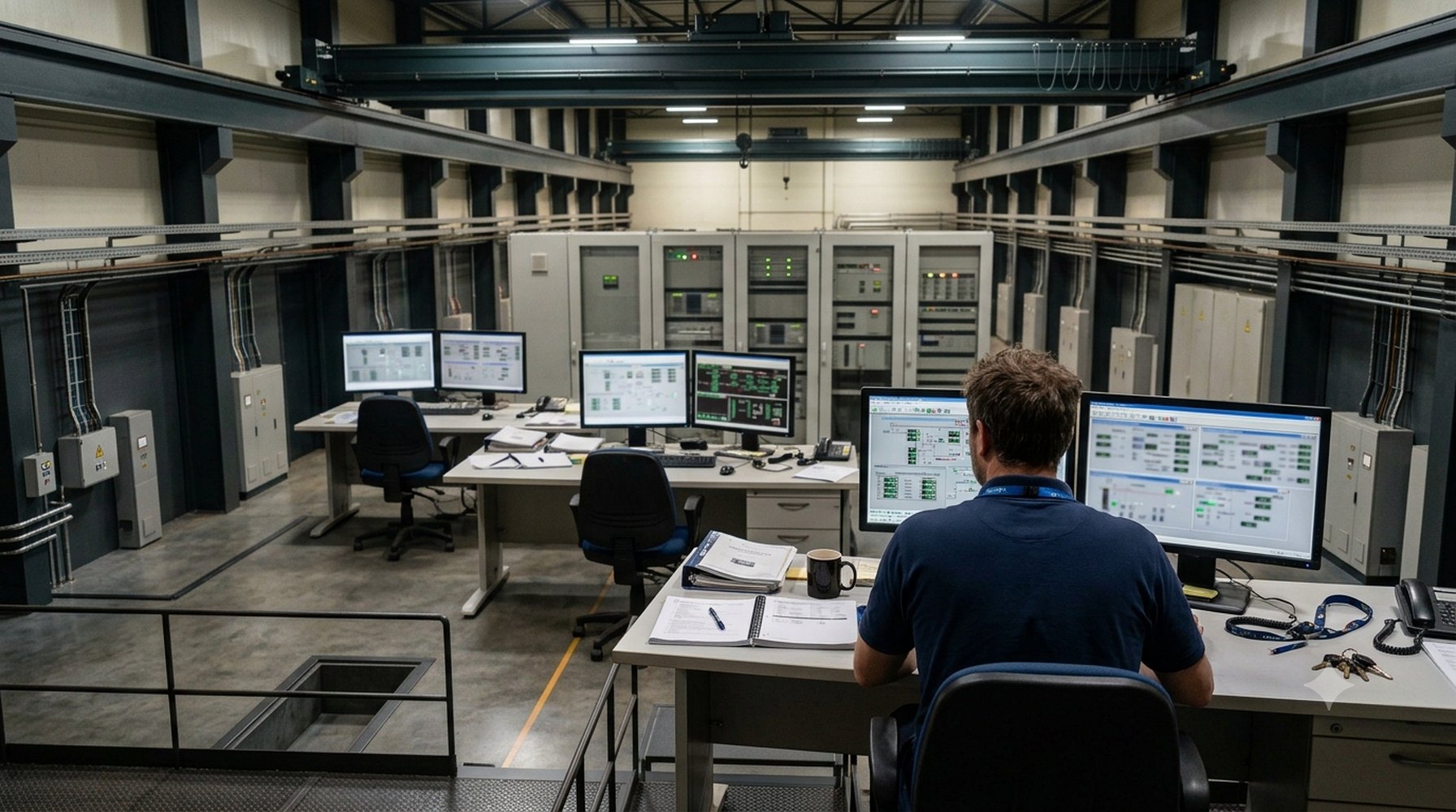
Every system ships with remote telemetry, alarm-triggered alerts, preventive maintenance with a defined scope, battery health reporting and an escalation path with a single point of contact.
- Remote monitoring and real-time alerts
- In-house field installers, offices in Monterrey and Querétaro
- Contractual response times (SLA) and a defined service checklist
- Critical spares stocked in Mexico, and monitoring connectivity segregated from the plant's OT network